When people imagine ancient Rome, they often picture grand baths, marble columns, and impressive engineering. Yet behind this image of luxury lay a daily reality far less glamorous—the Roman public toilet.
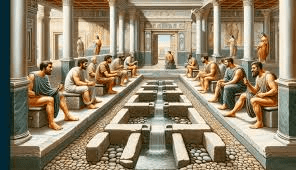
Unlike the opulent bathhouses, Roman latrines were stark, communal spaces. Long stone or marble benches lined the walls, each carved with circular holes placed side by side. There were no dividers, no doors, and no privacy. Dozens of people sat together at once, carrying on conversations as they relieved themselves.
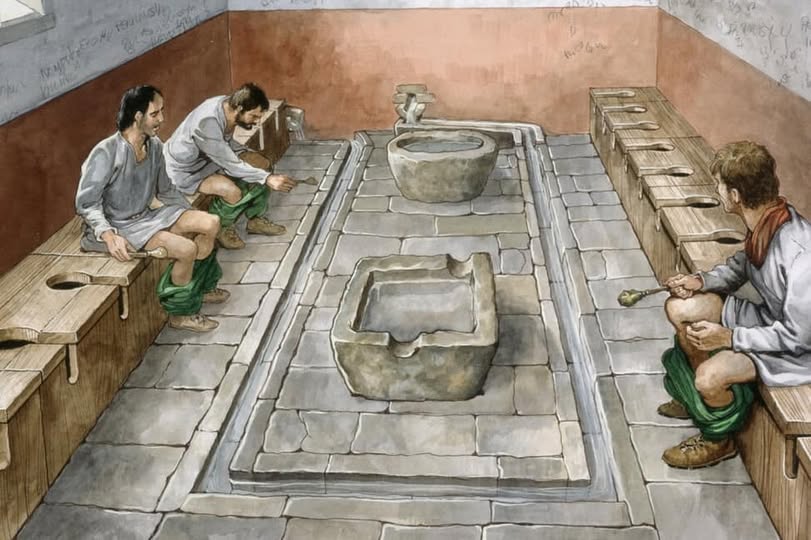
Beneath the seats ran a shallow channel of constantly flowing water meant to carry waste away. However, there was no flushing system, and odors lingered heavily in the air. These toilets were functional, but comfort was never part of the design.
Hygiene practices were equally unsettling by modern standards. Instead of toilet paper, Romans used a tersorium—a sponge attached to a wooden stick. After use, it was rinsed in water mixed with vinegar or salt and then left for the next person. This shared cleaning tool, reused countless times, made Roman toilets breeding grounds for disease.
The philosopher Seneca recorded a chilling story that reveals just how grim these spaces could be. He tells of a gladiator who, driven by despair, ended his life by forcing the communal sponge down his throat—an act that forever tied Roman latrines to fear as much as necessity.
The dangers didn’t end there. Roman sewer systems, while engineering marvels, were hazardous. Methane gas sometimes accumulated below, leading to sudden bursts of flame rising from toilet openings. Rats, insects, and other creatures crawled freely through the sewer tunnels, occasionally emerging where people least expected them.
Despite Rome’s technological achievements, its public toilets were places of discomfort, anxiety, and real danger. And yet, millions of Romans used them daily—because they had no alternative.
Understanding these grim details doesn’t diminish Roman civilization. Instead, it reminds us how far human hygiene, safety, and privacy have evolved—and how even the greatest empires had their most unpleasant corners.
- กทม. วิกฤต! ประกาศเตือนภัยซ้ำซ้อน “ร้อนระอุ-ฝุ่นคลุ้ง” ทั่วเมือง: วิธีดูแลตัวเองให้ปลอดภัย
- วิกฤตการณ์ทางทะเล: สัญญาณเตือนภัยสำหรับประเทศไทย
- The three monkeys began to like the monkey doll. The three of them slept, hugged, and kissed
- This Is No Anna’s Fault! Why Monkey Amina Scared?
- When he was very tired, the older monkey would drop his younger brother to get some relief. 💥🐒📌👇