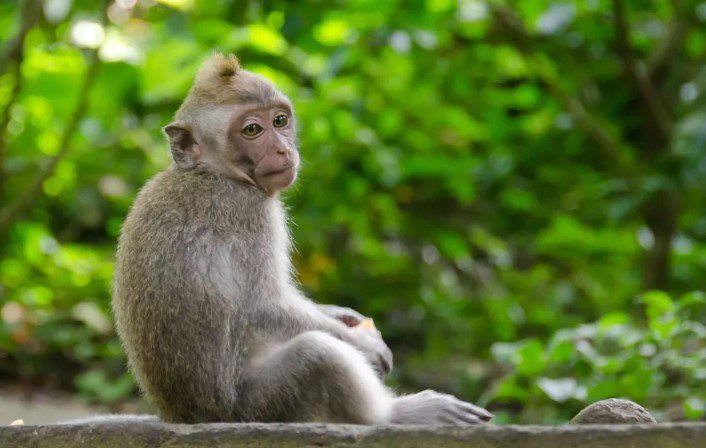
Monkeys, like all mammals, reproduce through natural mating behavior. While the topic may sound sensitive, it is an important and fascinating part of wildlife biology. Understanding how monkeys mate helps us better appreciate their social structure, survival instincts, and family life.
🌿 1. The Female Fertile Period (Estrus)
Female monkeys can only become pregnant during a specific fertile time called estrus. During this period, their bodies go through hormonal changes that signal readiness to mate.
In species like the Rhesus macaque, females may show visible signs such as swelling or behavioral changes. These signals help males recognize when the female is fertile.
Estrus does not last long, so timing is very important in the monkey world.
🐵 2. Courtship and Competition
Before mating, there is often a period of courtship. Males may:
- Groom the female
- Stay close and follow her
- Make soft vocal sounds
- Display strength to impress her
In species such as the Olive baboon, males sometimes compete aggressively with rivals. Stronger or higher-ranking males usually have more mating opportunities.
However, not all monkey societies are the same. Some are more peaceful, while others have strict dominance hierarchies.
💞 3. The Mating Process
When a female accepts a male, mating typically happens quickly. The male mounts the female, and the process may last only a short time. During her fertile period, mating can occur multiple times to increase the chance of pregnancy.
In species like the Long-tailed macaque, females may mate with more than one male. This can reduce conflict within the group and increase genetic diversity.
👶 4. Pregnancy and Birth
If fertilization is successful, pregnancy begins. The length of pregnancy depends on the species but usually lasts between 5 to 7 months.
After birth, the mother provides constant care — carrying, feeding, and protecting her baby. In most monkey species, mothers are the primary caregivers, while males may or may not stay involved.
🌳 Why Monkey Mating Behavior Matters
Monkey reproduction is not just about survival — it shapes their entire social system. Dominance, friendship, cooperation, and even group stability are influenced by mating patterns.
By understanding these behaviors, we gain insight into:
- Animal social intelligence
- Evolutionary biology
- The complexity of primate societies
Leave a Comment